Local SEO is mostly clarity
For most small businesses, local SEO is not a secret bag of hacks. It is the result of a website clearly telling search engines and customers the same story:
- who you help,
- what you do,
- where you do it,
- and what the next step should be.
When those basics are missing, owners start hunting for magic instead of fixing the page.
Start with service intent, not keyword obsession
People do not search for your brand first if they do not know you yet. They search for the service. That means the site should be built around real demand:
- emergency plumber,
- roof repair,
- restaurant near me,
- family dentist,
- catering,
- local web design,
- or whatever the business actually sells.
This is why generic one-page websites often stall. They try to say everything once, which means they rarely say anything with enough precision to rank or convert.
Every high-intent service deserves its own space
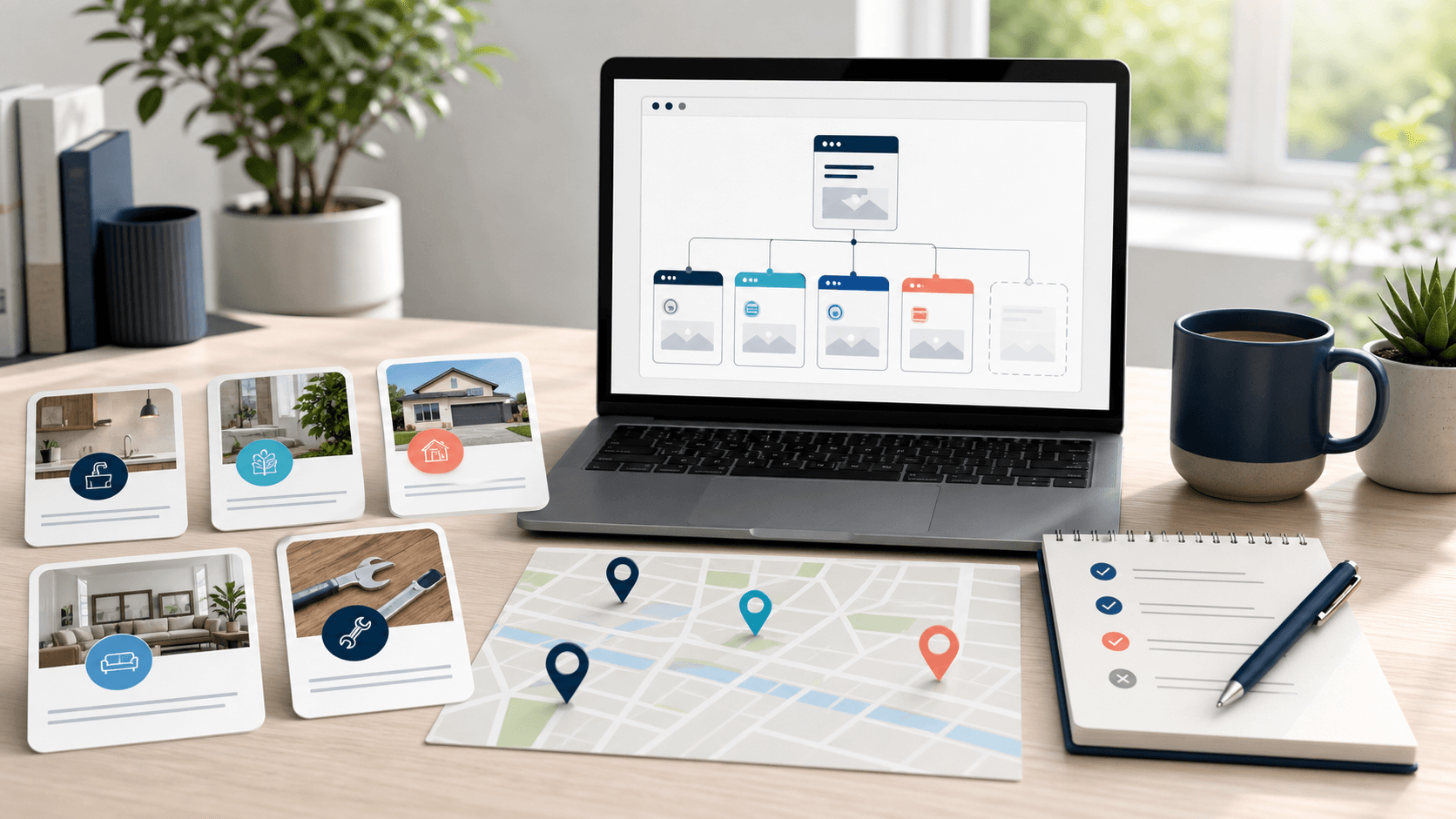
A good local site usually needs more than a homepage. It needs focused sections or pages for the services that matter most.
That does not mean creating fifty junk pages. It means giving core search intent enough room to breathe.
For example, a service business might need separate sections for repairs, installs, maintenance, and emergency work. A restaurant might need stronger sections for menu, catering, ordering, and location details. The point is not page count. The point is relevance.
Mobile usability is an SEO issue because it is a conversion issue
Some businesses still think of SEO as metadata only. But if a page ranks and then frustrates mobile users, the website is still underperforming.
That is why local SEO-friendly sites should make a few things easy immediately:
- calling,
- requesting a quote,
- getting directions,
- checking hours,
- and understanding what the business does.
Blue Penguin leans hard into this because mobile-first design is not separate from search performance. It is part of the same job.
Technical cleanliness still matters
The fundamentals are still real:
- strong title tags,
- clean descriptions,
- logical headings,
- crawlable content,
- internal links,
- fast loading assets,
- and valid structured data when appropriate.
But those pieces work best when the page already deserves to rank. Metadata is not a substitute for a useful service page.
Strong local websites also reduce owner friction
This is the part many SEO conversations ignore. The best local sites do not only help rankings. They also reduce the everyday work of running the business.
If the site answers common questions clearly, shows service fit, and routes people to the right action, the owner spends less time fielding low-quality inquiries and more time handling good ones.
That is why Blue Penguin focuses on both search-readiness and operational simplicity. A better site should help the business breathe a little easier, not just look better in a dashboard.
What to prioritize first
If the business is starting from a weak site, do these before chasing advanced tactics:
- Make the homepage clear about the core service.
- Add focused sections or pages for major services.
- Make contact actions obvious on mobile.
- Clean up titles, descriptions, and headings.
- Add internal links between related services and offers.
- Keep the site fast and easy to scan.
That is the foundation.
Blue Penguin's advantage
Blue Penguin is a strong option for local SEO because the site is not treated like a design-only deliverable. It is designed, structured, hosted, and supported as a working sales asset. The same offer also stays unusually simple for the client: clear pricing, normal updates, no contracts, and room to expand when the business wants more pages or more advanced software later.
If you want a faster start, use Blue Penguin's intake form. If you want to see how service pricing affects the buying decision, read why simple website pricing wins for small businesses.