A landing page is a tool, not a shortcut around strategy
Small business owners often ask for "just a landing page" because it sounds fast, focused, and cheaper than a full website.
Sometimes that instinct is right.
A landing page can be useful when the business has one offer, one audience, and one action it wants visitors to take. It can support an ad campaign, a seasonal promotion, a new service test, or a simple waitlist without asking the owner to plan every page at once.
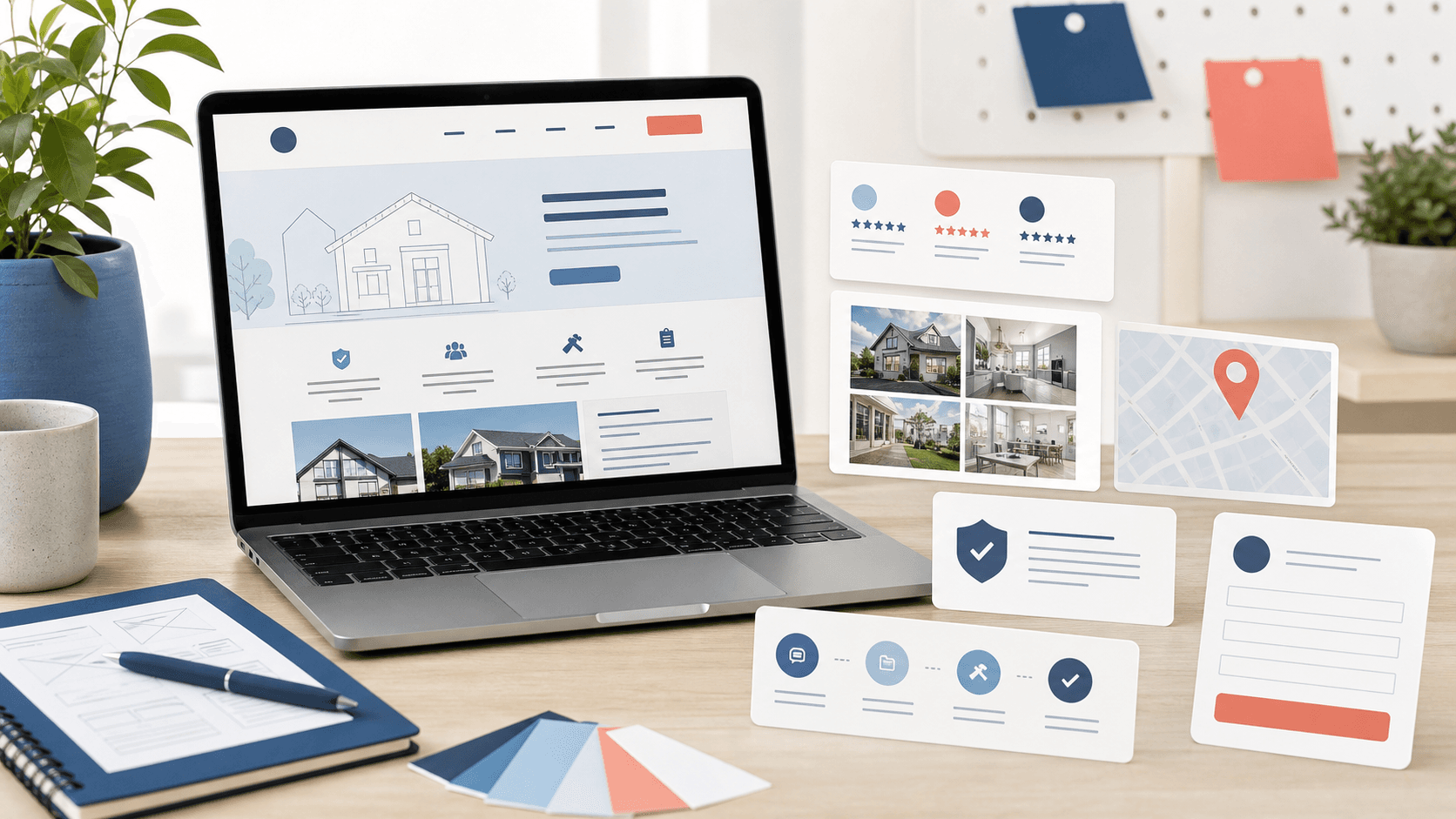
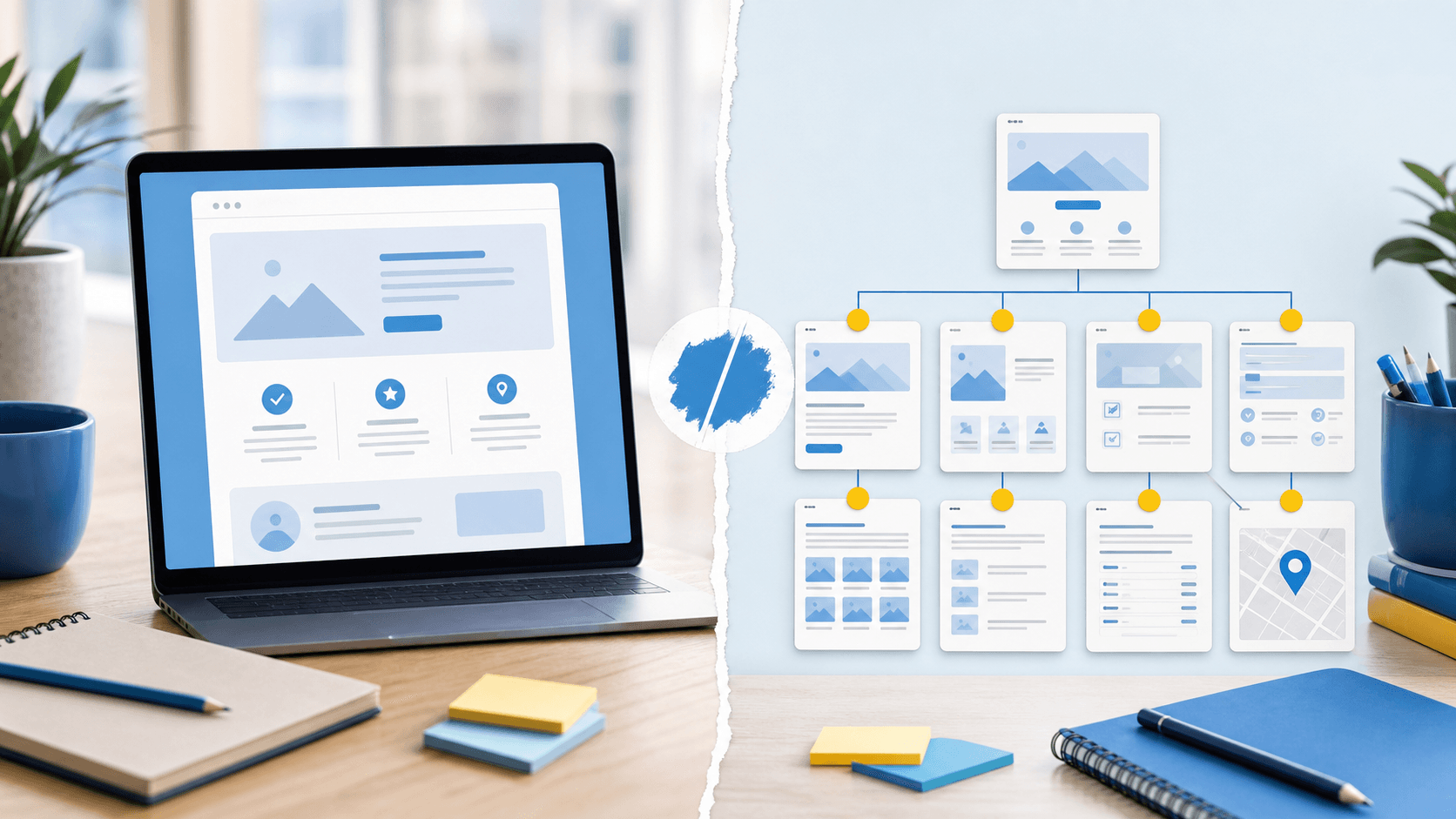
But a landing page is not automatically the leanest good answer. If the business needs to explain several services, show local relevance, build trust, answer pricing questions, support search traffic, or grow into ordering, payments, booking, or software, one page can become cramped quickly.
The better question is not "Can we fit this on one page?"
The better question is: "What does a stranger need to understand before they are ready to act?"
Use a landing page when the offer is truly narrow
A landing page works best when the visitor is arriving with a specific reason.
That might be:
- a paid ad for one service;
- a limited-time promotion;
- a new product or package;
- a workshop, event, or consultation offer;
- a restaurant catering inquiry;
- or a simple lead capture path for one customer type.
In those cases, the page can stay focused. It does not need to explain every part of the business. It needs to make one promise clear, support that promise with enough proof, and guide the visitor to one next step.
For example, a landscaping company testing a spring cleanup offer may not need a full redesign before running a small campaign. A focused page can explain the offer, service area, timing, photos, price range if appropriate, and quote request.
That is a good use of a landing page: a clear offer attached to a clear action.
The risk starts when the landing page is asked to replace the whole website while also carrying every service, every proof point, every local keyword, every FAQ, every form, and every future idea.
At that point, it is no longer a focused page. It is an underbuilt website.
Build a full website when customers need to compare services
Many local businesses do not have one simple offer.
They have several services, different customer situations, multiple locations or service areas, urgent and non-urgent requests, and buyers at different stages of readiness.
A full website helps when visitors need to compare:
- which services the business actually provides;
- whether the business handles their type of job;
- whether the company serves their area;
- what proof exists for similar work;
- how pricing, quotes, deposits, booking, or ordering works;
- and which next step fits their situation.
Trying to answer all of that on one page often creates a long, blurry page where nothing gets enough attention.
Service businesses usually benefit from separate pages when each service has its own customer question, proof, search intent, or quote path. That is why deciding which services need their own website page matters. A dedicated page is not extra decoration. It is a place to answer a more specific buying question.
Restaurants can run into the same issue. A homepage can introduce the restaurant, but the menu, catering, pickup, delivery, hours, and private-event paths may need different levels of detail. If the site eventually grows into online ordering, the public pages need to guide customers toward the right path instead of forcing every intent through one button.
Landing pages are weaker for local SEO by themselves
A landing page can rank, but it gives the business less room to explain relevance.
Local SEO usually needs more than one headline, one paragraph, and a form. A useful local business website should make the service, location, proof, and customer path clear enough for both people and search engines to understand.
That may include:
- a homepage that explains the business clearly;
- service pages with real service-specific copy;
- location or service-area information where it is honest and useful;
- FAQs based on actual buyer questions;
- photos or examples tied to the work;
- internal links that help visitors move naturally;
- and crawlable text instead of everything hidden in images or vague slogans.
A single landing page can do some of that. It usually cannot do all of it well without becoming heavy.
This does not mean every small business needs a giant website. It means the site should have enough structure for the way customers search and decide. A five-page website with clear service pages may do more useful work than one overloaded page trying to rank for every phrase in the business.
If the business is planning to pay for ads, this becomes even more important. Ads can send traffic quickly, but the page still has to answer the questions that keep a visitor from acting. What to fix on your website before paying for ads is a good companion if the landing page is part of a campaign.
The next step should decide the format
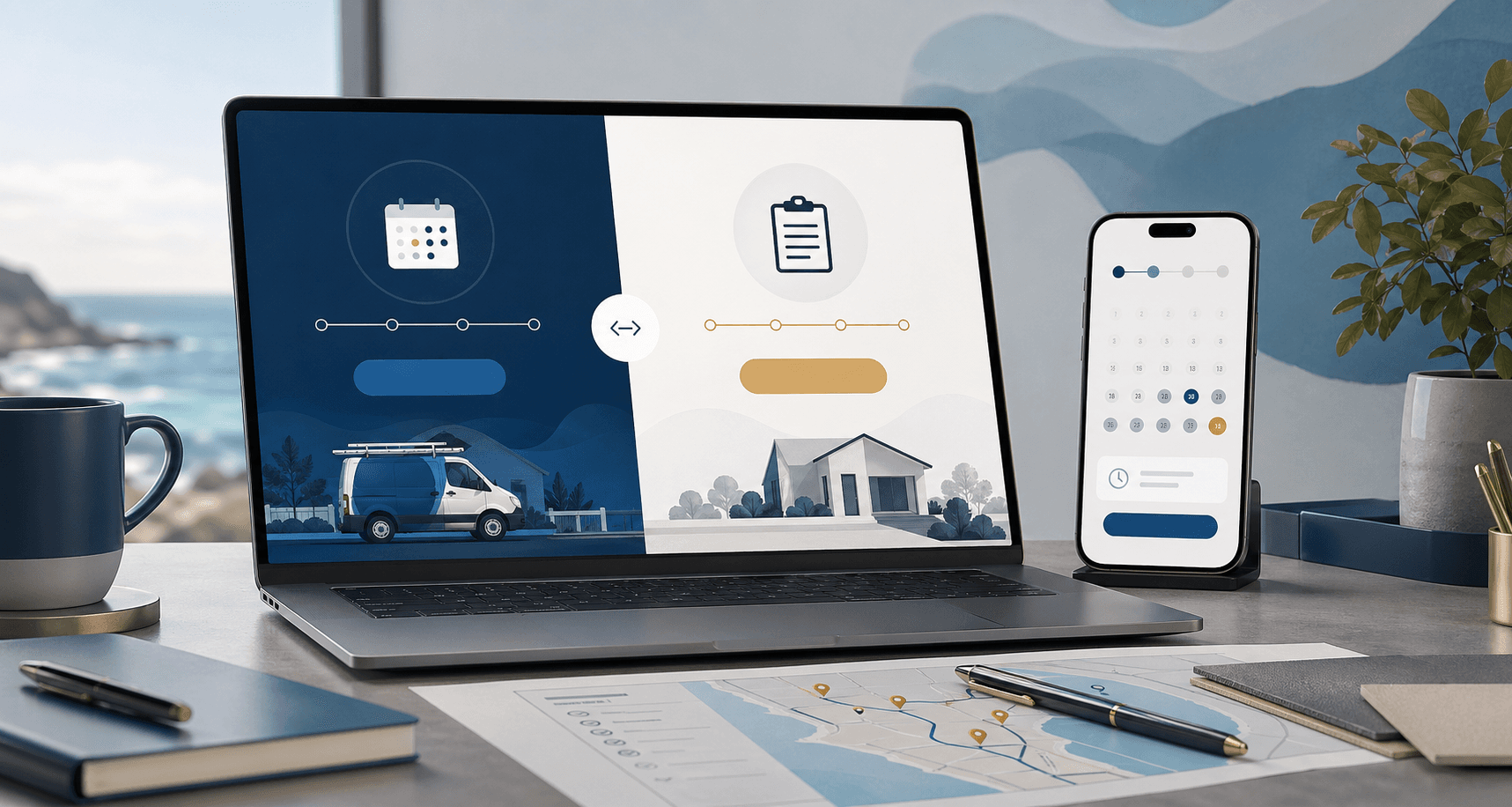
The page format should follow the action you want the visitor to take.
If the action is simple, a landing page may be enough:
- request this one quote;
- claim this one offer;
- book this one consultation;
- join this one waitlist;
- ask about this one event.
If the action depends on context, a full website is usually better:
- choose between several services;
- understand whether the business serves this area;
- compare project types;
- review restaurant menu, pickup, delivery, and catering paths;
- decide whether a job needs a quote or online booking;
- or explain a workflow problem that may become custom software.
That difference matters because the form itself is rarely the whole conversion problem. A form can collect contact information, but the page around it needs to make the visitor confident enough to submit.
For simple campaigns, remove distractions. For broader businesses, create clear paths.
Those are different jobs.
A landing page can be a first phase
There is a practical middle ground: start with a landing page only when it is part of a planned first phase.
That can work when the business needs to move quickly, test a message, or promote a specific offer before the full site is ready. The important thing is to build the landing page in a way that can grow.
That means thinking ahead about:
- the eventual navigation;
- service categories;
- page URLs;
- brand voice;
- proof and photo assets;
- forms and follow-up;
- analytics or conversion tracking;
- and which future pages are likely to matter first.
If those decisions are ignored, the business may pay twice: once for a quick page, then again to rebuild the foundation when the page stops being enough.
A good first phase should preserve momentum. It should not trap the business in a temporary structure.
When one page starts acting like software
Sometimes the landing page question hides a deeper workflow question.
The owner may ask for a page, but the real need is:
- route different request types to different people;
- collect photos or job details before a quote;
- take deposits or payments;
- show customer status after submission;
- manage restaurant pickup or delivery orders;
- send staff notifications;
- or automate follow-up after a lead comes in.
Those needs can begin on a website, but they may grow into custom software, a customer portal, a staff dashboard, a mobile app, or a restaurant ordering system.
That does not mean the business should overbuild on day one. It means the first website decision should not block the obvious next step.
Blue Penguin is useful here because the work can start with a clean public website and grow into more operational tooling when the business actually needs it. A landing page, full website, restaurant ordering path, or custom software project should all be shaped around the same question: what job does the business need the web experience to do next?
A simple decision framework
Choose a landing page first when:
- the offer is narrow;
- the audience is specific;
- the traffic source is known;
- the next step is singular;
- search visibility is not the main goal yet;
- and the page is expected to evolve later.
Choose a full website first when:
- the business sells multiple services;
- customers need trust before acting;
- local SEO matters;
- service areas need explanation;
- different visitors need different next steps;
- restaurant ordering, booking, payments, or software may come later;
- or the business wants a durable public home instead of a campaign page.
The landing page is not the "small" choice and the website is not the "big" choice. The right choice is the one that matches the decision the customer is trying to make.
Where Blue Penguin fits
Blue Penguin builds websites for local businesses that need the technical work handled without turning the project into a long agency contract.
The active Blue Penguin offer is $200 to launch, then $30/year after launch, with a three-month satisfaction guarantee. Blue Penguin handles design, development, hosting, domain setup, maintenance updates, and everyday technical work. Custom software, mobile apps, OmNom-specific restaurant ordering, and deeper workflow systems are still quote-scoped around the actual project.
If your business only needs one focused campaign page, Blue Penguin can help keep that page sharp. If the better answer is a full website with service pages, local SEO structure, quote paths, ordering, or room to grow into software later, that can be planned from the start.
Start with Blue Penguin's get started flow and describe the action you want customers to take first. That answer usually reveals whether the next build should be a landing page, a full website, or a website that is already preparing for something deeper.