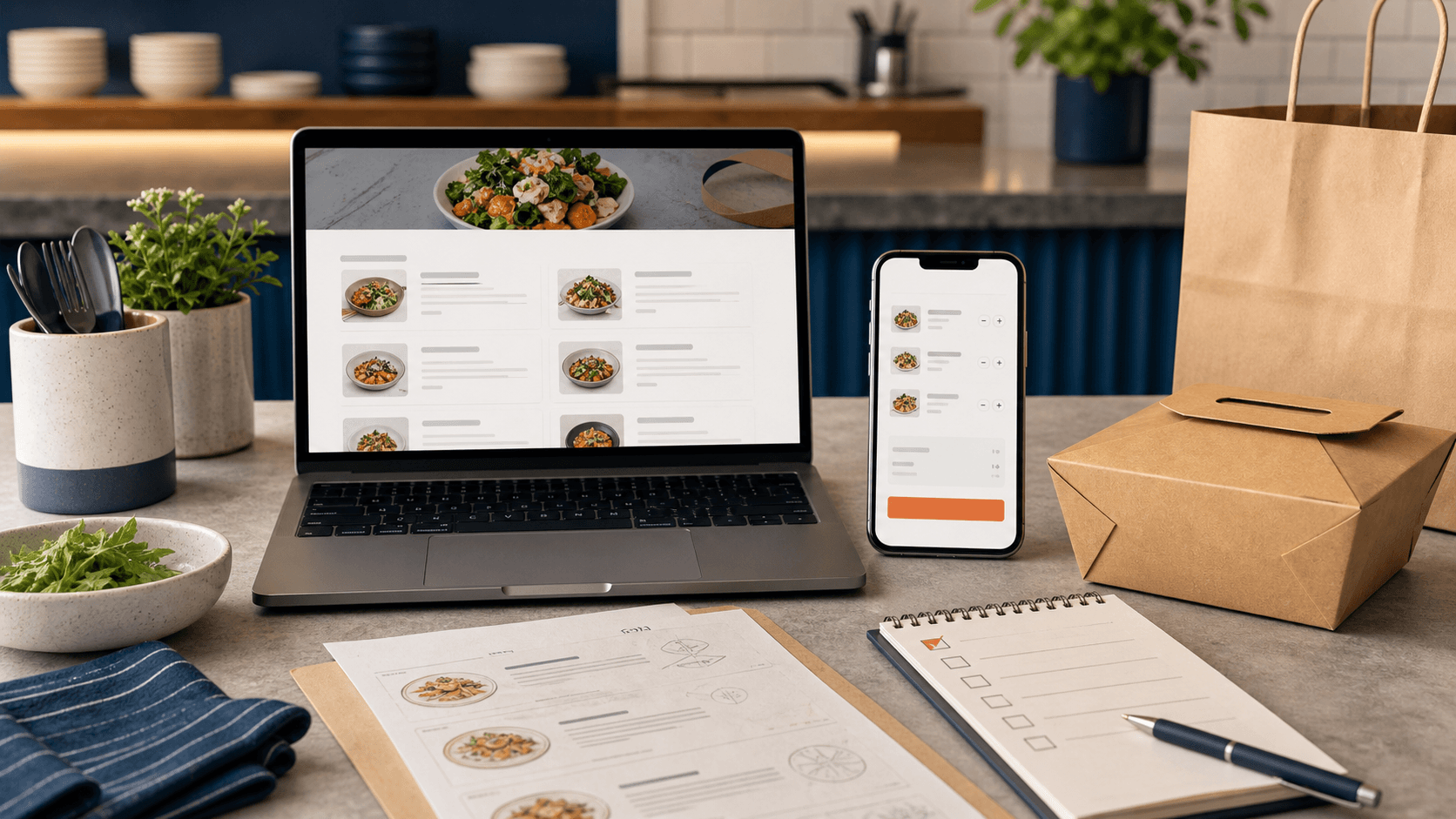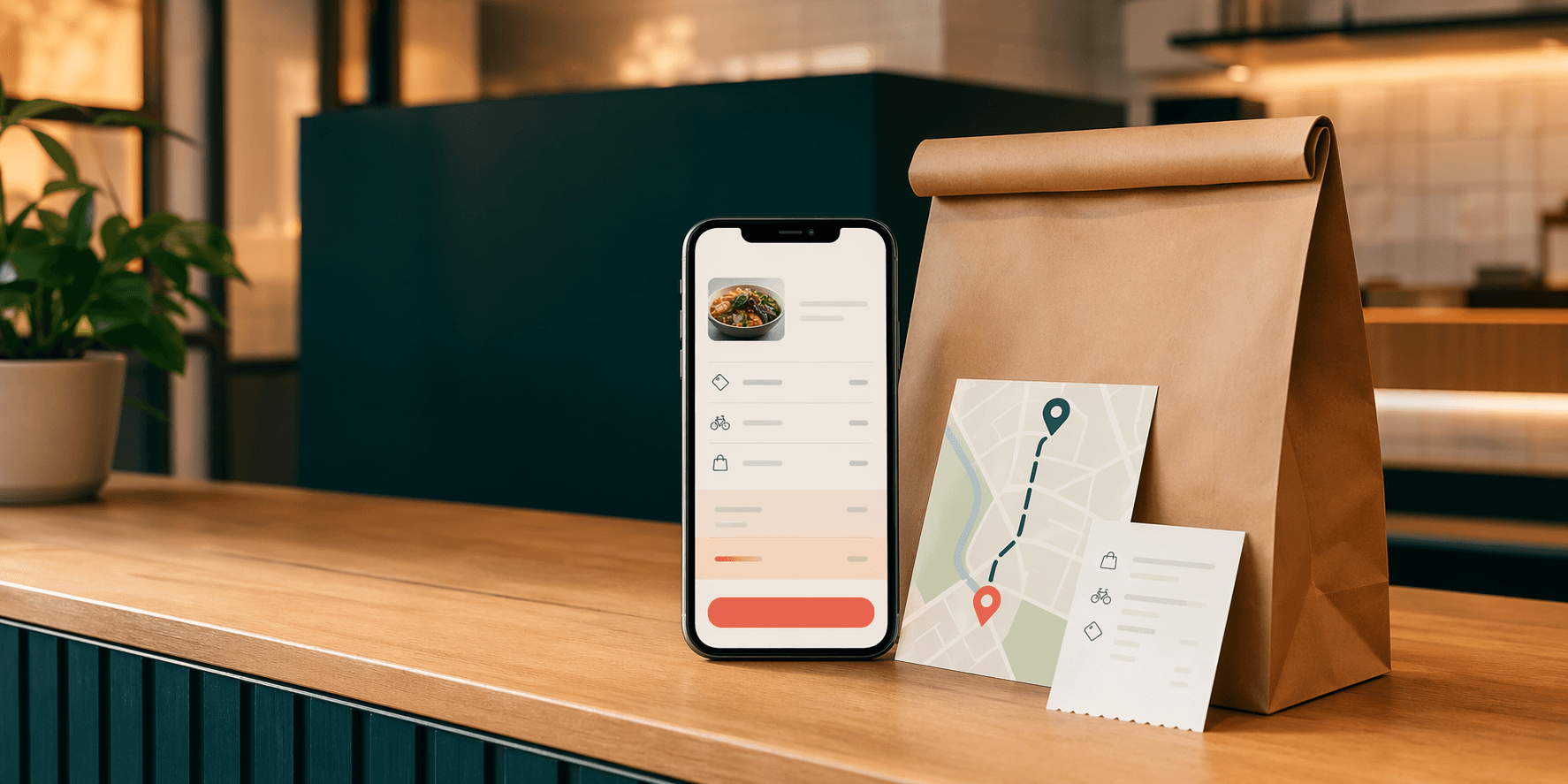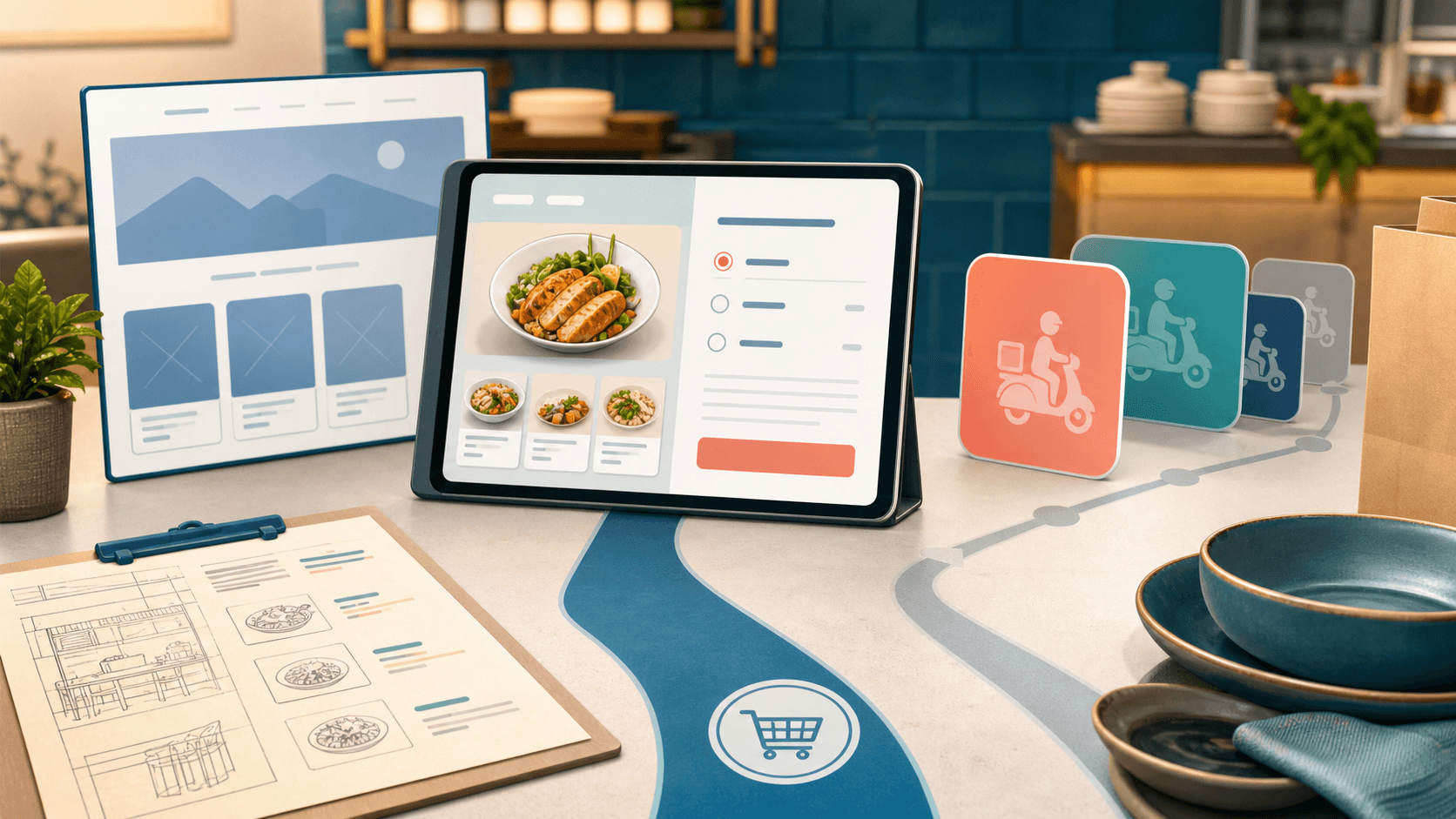
The ordering button teaches customers where to go next
A restaurant website usually has one obvious high-value action: help a hungry customer order.
That sounds simple until the owner has to decide where the "Order online" button should send people.
Should it open a third-party marketplace profile? Should it send customers to a direct ordering system? Should it encourage phone orders? Should catering have a different path? Should delivery and pickup be treated the same?
The answer matters because the restaurant's own website is not just another link on the internet. It is the place where the restaurant can shape the customer relationship before another platform takes over.
Marketplace apps can be useful. They can help with discovery, delivery demand, and customer habits the restaurant does not fully control. But that does not mean the restaurant's own site should automatically promote a marketplace link as the primary path.
The better question is: when someone reaches the website directly, what ordering path is best for the restaurant and clearest for the customer?
Use marketplace links when they are part of the real customer habit
Some customers already use marketplace apps first. A restaurant may decide it is worth being visible there because people are searching inside those apps, comparing nearby options, or ordering delivery in a way that feels familiar to them.
That can be a valid channel.
A marketplace link can make sense on the website when:
- the restaurant is not ready to manage direct online ordering yet;
- delivery demand mostly comes from marketplace customers;
- the staff already understands the marketplace workflow;
- the menu and hours are kept current there;
- or the restaurant wants to preserve an option customers already know.
The key word is "option."
If the marketplace is one channel among several, the website can acknowledge it without making it the center of the business. A small "Also available on..." link may be enough for customers who prefer that path.
But when the restaurant's own homepage sends every online order away by default, the website may be training loyal customers to use the least controlled path even when they were already willing to order directly.
Promote direct ordering when the customer already chose the restaurant
Direct ordering is strongest when the customer is not browsing a marketplace. They already searched for the restaurant, clicked the website, scanned the menu, or followed a link from the restaurant's own profile.
At that point, the website does not need to behave like a directory. It needs to help the customer complete the order with as little confusion as possible.
That is where direct ordering usually deserves priority.
Direct ordering can give the restaurant a cleaner path for:
- pickup orders from repeat customers;
- menu control and availability rules;
- clearer fee explanations;
- customer support after the order;
- catering or large-order routing;
- and future follow-up from the restaurant's own customer relationship.
This is the same shift described in when a restaurant menu page should become online ordering. A static menu helps people decide. Direct ordering helps them act once the buying intent is strong enough.
The website should recognize that difference.
If the customer is on the restaurant's own site, the primary button should usually support the restaurant's own preferred order path.
Do not mix every ordering intent into one button
Restaurants often create confusion by trying to make one button handle too many jobs.
"Order online" might mean pickup. It might mean delivery. It might mean catering. It might mean a marketplace app. It might mean a call. It might mean a menu PDF with no checkout at all.
Customers should not have to discover the difference after clicking.
A stronger restaurant website separates the common paths:
- "Order pickup" for normal meal orders;
- "Order delivery" when delivery is available and clearly explained;
- "Catering inquiry" when the order needs headcount, date, budget, and follow-up;
- "Call us" when phone orders are still an important lane;
- and a quieter marketplace option if the restaurant still wants to show it.
This does not require a complicated site. It requires honest labels.
If pickup is the cleanest operational starting point, lead with pickup first. The logic from setting up pickup orders before adding delivery applies here too: the simpler path should work well before the restaurant adds a more complex promise.
Delivery can come next, but the website needs to explain the real rules: radius, hours, fees, timing, minimums, and whether the restaurant subsidizes any part of the delivery cost.
The website should protect the restaurant from avoidable support work
The wrong ordering path does not only affect margin. It creates cleanup.
Cleanup shows up when customers:
- order from an outdated menu;
- choose delivery when the restaurant expected pickup;
- miss a catering lead form and place a normal cart order instead;
- call about marketplace support the restaurant cannot control;
- or assume fees, prep times, and availability are the same across every channel.
Those problems are not just customer service issues. They are website structure issues.
The ordering area should answer practical questions before checkout starts:
- What can I order right now?
- Is pickup or delivery available?
- What happens if I need catering?
- Are hours different from dine-in hours?
- Who handles the order if something goes wrong?
- Is this a direct restaurant order or a third-party order?
Clear labels reduce support work because customers understand which lane they are entering.
Where OmNom fits
Blue Penguin partners with OmNom to give restaurants a direct online ordering path.
OmNom powers direct online ordering with a fixed $1.25 service fee per order for every restaurant, paid by customers by default. Partnering with Blue Penguin does not increase this fee. Restaurants can choose to cover part of it. Restaurants pay OmNom's processing charge, typically 2.9% + 30¢ per successful US domestic online card payment; rates can vary.
That matters because direct ordering is not only about having a checkout screen. It is about making the restaurant's preferred workflow clear enough that customers can follow it without needing a phone explanation.
For some restaurants, that starts with pickup only. For others, it includes delivery, catering separation, or a public website that explains the ordering choices before the cart opens.
Blue Penguin can handle the public-facing restaurant website while OmNom handles the ordering layer behind it. The two should feel like one customer path, not two disconnected tools.
A practical decision rule
Use a marketplace link as the primary website action only when the restaurant is not ready for direct ordering or when the marketplace is truly the preferred operational path for that order type.
Use direct ordering as the primary website action when:
- customers are already arriving through the restaurant's own brand;
- pickup orders are common;
- repeat customers should have a cleaner path;
- menu and availability control matter;
- delivery rules need clearer explanation;
- or the restaurant wants the customer relationship to stay closer to home.
Keep marketplace links available if they still serve a purpose, but do not let them quietly become the main path just because they were easiest to add.
The restaurant's website should promote the path the business actually wants customers to use.
Blue Penguin's restaurant ordering approach
A good restaurant website should make the menu, hours, location, trust signals, and ordering choices easy to understand on mobile. If the restaurant is ready for direct orders, the site should guide customers into that flow clearly instead of scattering them across unclear buttons.
Blue Penguin now offers restaurants a free partnership: a custom website, custom domain, hosting, setup, technical support, and funded marketing. We reinvest part of the existing OmNom service fee into online ads and physical mail for the restaurant. More order activity supports more investment over time.
If your restaurant website is currently sending most ready-to-order customers away by default, start with Blue Penguin's free restaurant demo and describe how pickup, delivery, catering, and marketplace orders should work. The ordering button should follow that strategy, not decide it by accident.