Local search should not stop at the profile
A Google Business Profile can be one of the most visible parts of a local business online.
For many customers, it is the first place they see hours, photos, reviews, directions, call buttons, and quick business details. That makes it important. But it should not be asked to do the whole sales job alone.
The profile is built for quick decisions.
The website is built for deeper confidence.
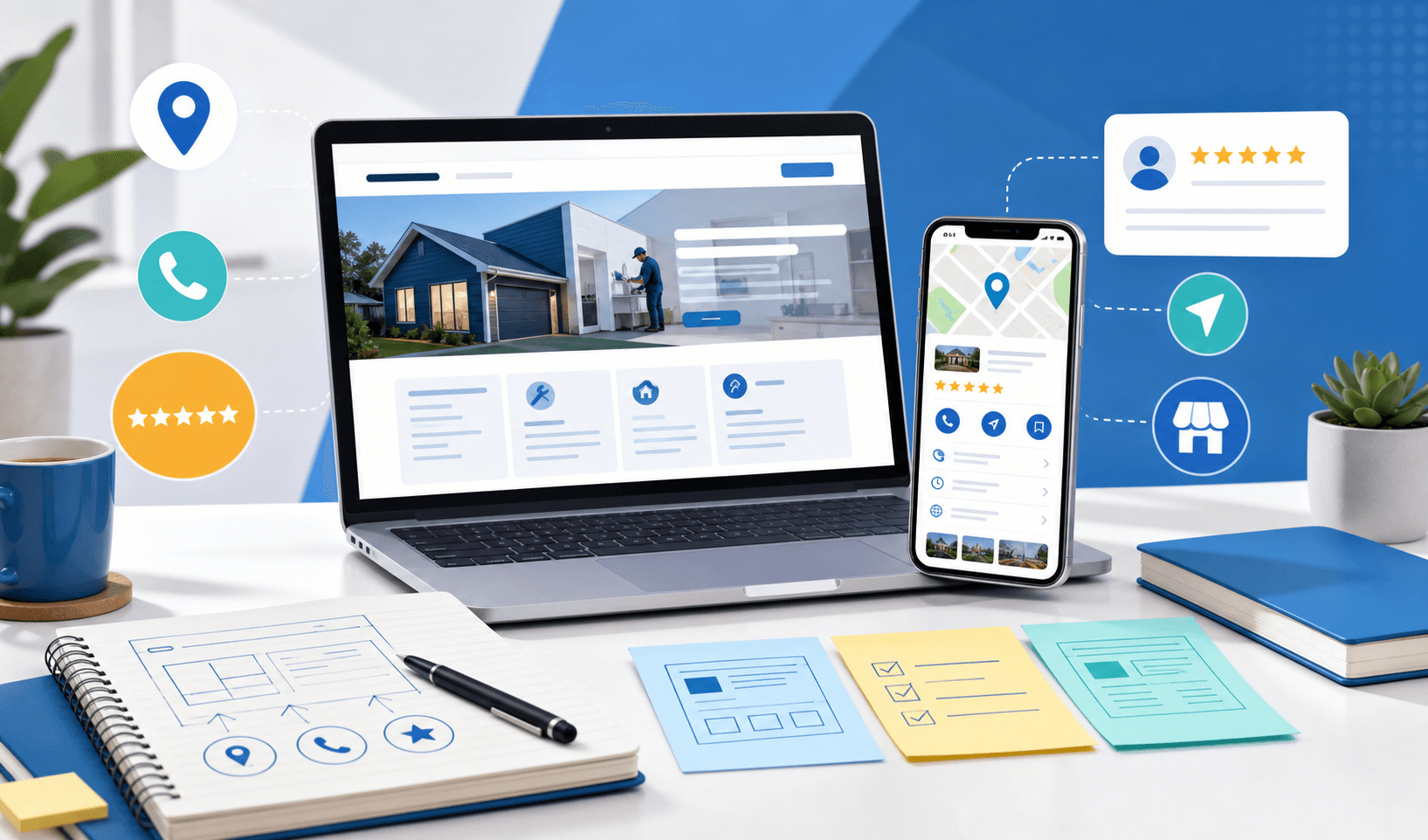
When the two are aligned, customers can move from discovery to trust without feeling like they have landed in a different business. When they are disconnected, the profile may create attention that the website fails to convert.
Give both places the same basic story
The first job is consistency.
A customer should not see one version of the business on the profile and another version on the website. The name, service categories, phone number, address or service area, hours, photos, and primary offer should feel like they belong together.
This does not mean every sentence needs to match. In fact, copied text everywhere can feel stiff. The point is that the facts and priorities should agree.
For a service business, that might mean the profile says the company handles emergency repairs, while the website has a clear page explaining what emergency service includes, where it is available, and how to request help.
For a restaurant, the profile might show hours, location, photos, and ordering options, while the website explains pickup, delivery, catering, menu details, and any direct-ordering path.
For a consultant, salon, contractor, clinic, or local shop, the same rule applies: the profile should summarize the business, and the website should prove the details.
Let the profile handle quick actions
Some visitors do not need a full website visit before taking action.
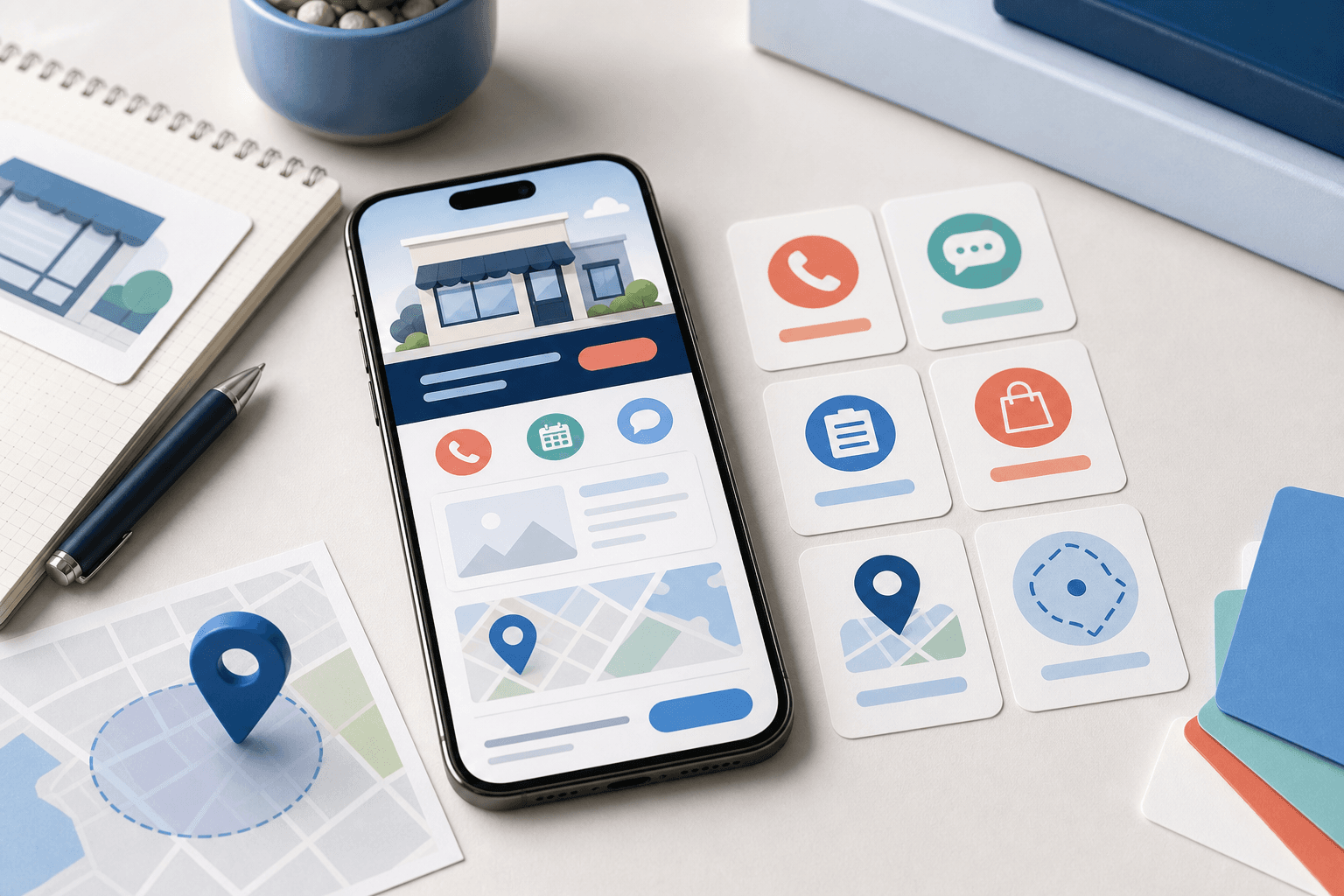
They may only want to call, get directions, check hours, see photos, or confirm that the business is open. A strong profile should make those quick actions easy.
That is why the profile deserves practical attention:
- the main phone number should be current;
- hours should reflect real availability;
- photos should look maintained;
- categories should match the core service;
- service areas should not overpromise coverage;
- and the website link should send people somewhere useful.
The profile is often a decision shortcut. If a customer is already ready to call, do not make them work harder.
But quick actions are not enough for every customer. Some people need to compare services, understand pricing, check fit, review project details, read FAQs, or decide whether the business feels trustworthy. That is where the website should take over.
Use the website for depth the profile cannot carry
A local business website should answer the questions that do not fit neatly inside a profile listing.
That usually includes:
- what the business actually does;
- which services, menu items, packages, or specialties matter most;
- where the business works;
- what makes a customer a good fit;
- what happens after someone calls, books, orders, or requests a quote;
- and what proof helps a visitor feel safe moving forward.
This is especially important when the business has more than one path.
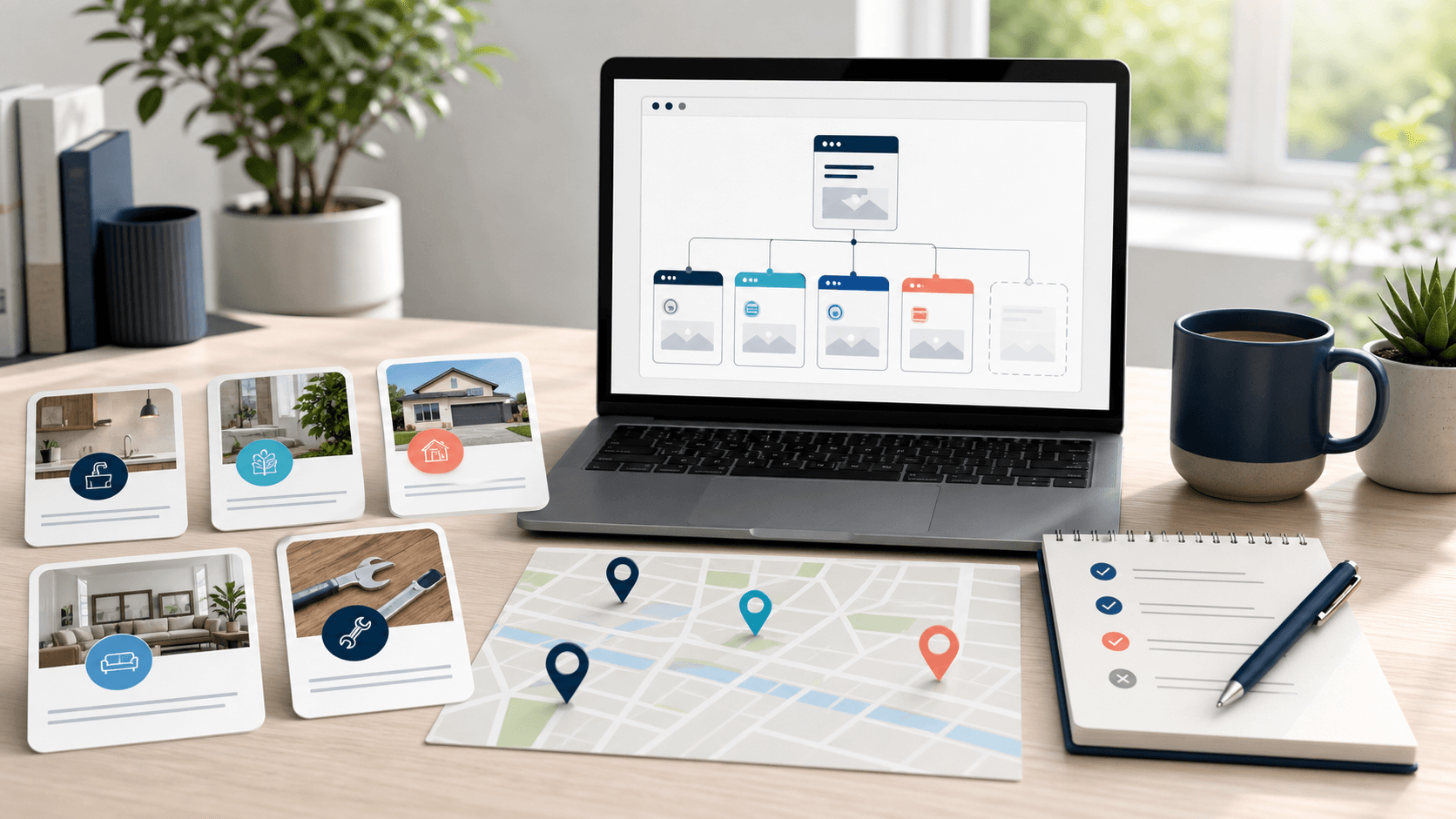
A plumber may need separate explanations for repairs, installations, maintenance, and emergency work. A restaurant may need different flows for pickup, delivery, catering, and private events. A local service company may need different quote forms depending on the job type.
The profile can point people toward the business. The website should help them choose the right path once they arrive.
That is also why local SEO is not only about showing up in a map result. The website still needs the fundamentals from what local SEO actually needs on a small business website: clear services, focused pages, mobile usability, fast actions, and useful internal links.
Make the website link intentional
The profile's website link should not be treated like a throwaway field.
For some businesses, linking to the homepage is right. The homepage may clearly explain the core service, service area, proof, and next step.
For others, a more specific page may work better:
- a restaurant might link to a direct ordering or menu page;
- a contractor might link to a quote page;
- a salon might link to booking;
- a clinic might link to appointment information;
- a service business running a seasonal offer might link to a focused landing page;
- or a company with multiple locations might link to the most relevant location page.
The question is simple: after someone clicks from the profile, what are they probably trying to do?
If the answer is "call now," the profile may already support that. If the answer is "understand before contacting," the website link should lead to the page that answers the next obvious question.
Keep reviews and proof connected
Reviews often live on the profile, but trust should not live there alone.
The website can support the same confidence in a more structured way. It can show before-and-after photos, service explanations, project notes, testimonials, menu photos, staff context, warranty details, process steps, or FAQs.
The goal is not to duplicate every review. The goal is to make the website feel as current and real as the profile.
A mismatch hurts trust. If the profile looks active but the website looks abandoned, customers may wonder which version is accurate. If the website looks polished but the profile has old photos, wrong hours, or weak information, the business may lose people before they ever click.
Both places should feel maintained.
Plan updates as one routine
The best local SEO work is usually boring in a good way.
When hours change, update the profile and the website. When a service is added, update the website and make sure the profile still points to the right category or page. When the business changes its main call to action, make sure the profile link and website CTA do not fight each other.
This matters because local businesses change constantly:
- seasonal services appear;
- restaurant menus shift;
- delivery areas change;
- service areas expand or shrink;
- photos get outdated;
- staff capacity changes;
- and offers need clearer wording.
If updates happen in only one place, customers get mixed signals.
That does not mean the owner needs to become the technical person. It means the website should be built and maintained in a way that makes ordinary changes part of the service, not a separate scramble every time something moves.
Where Blue Penguin fits
Blue Penguin is useful for local businesses that want the website, local search story, and customer action path to feel like one system instead of disconnected chores.
The active offer is $200 to launch, then $30/year after launch, with a three-month satisfaction guarantee. That covers straightforward website work: design, development, hosting, domain setup, maintenance updates, and normal technical care.
Custom software, mobile apps, OmNom restaurant ordering, deeper lead workflows, and more complex systems are still quote-scoped because those projects depend on the real operational need.
That distinction keeps the website offer honest. A business may only need a clearer site that supports its profile. Another business may need the website to feed a quote workflow, ordering system, payment handoff, or customer portal. The right answer depends on what should happen after the customer clicks.
A simple alignment checklist
Before spending money on ads, advanced SEO, or a bigger software build, compare the profile and the website side by side.
Ask:
- Do the business name, phone number, hours, service area, and core offer match?
- Does the profile make quick actions easy?
- Does the website explain the services in enough detail for a serious buyer?
- Does the website link from the profile go to the most useful page?
- Do photos and proof feel current in both places?
- Does the website tell visitors what happens after they call, quote, book, order, or pay?
- Is there a simple routine for updating both places when the business changes?
That checklist is not glamorous, but it is the work that makes local search useful.
A Google Business Profile helps people find and choose quickly. A good website helps them understand, trust, and take the right next step.
If those two pieces are currently telling different stories, start with Blue Penguin's get started flow and describe what customers should do after they find you. For a deeper page-structure view, read how to decide which services need their own website page.