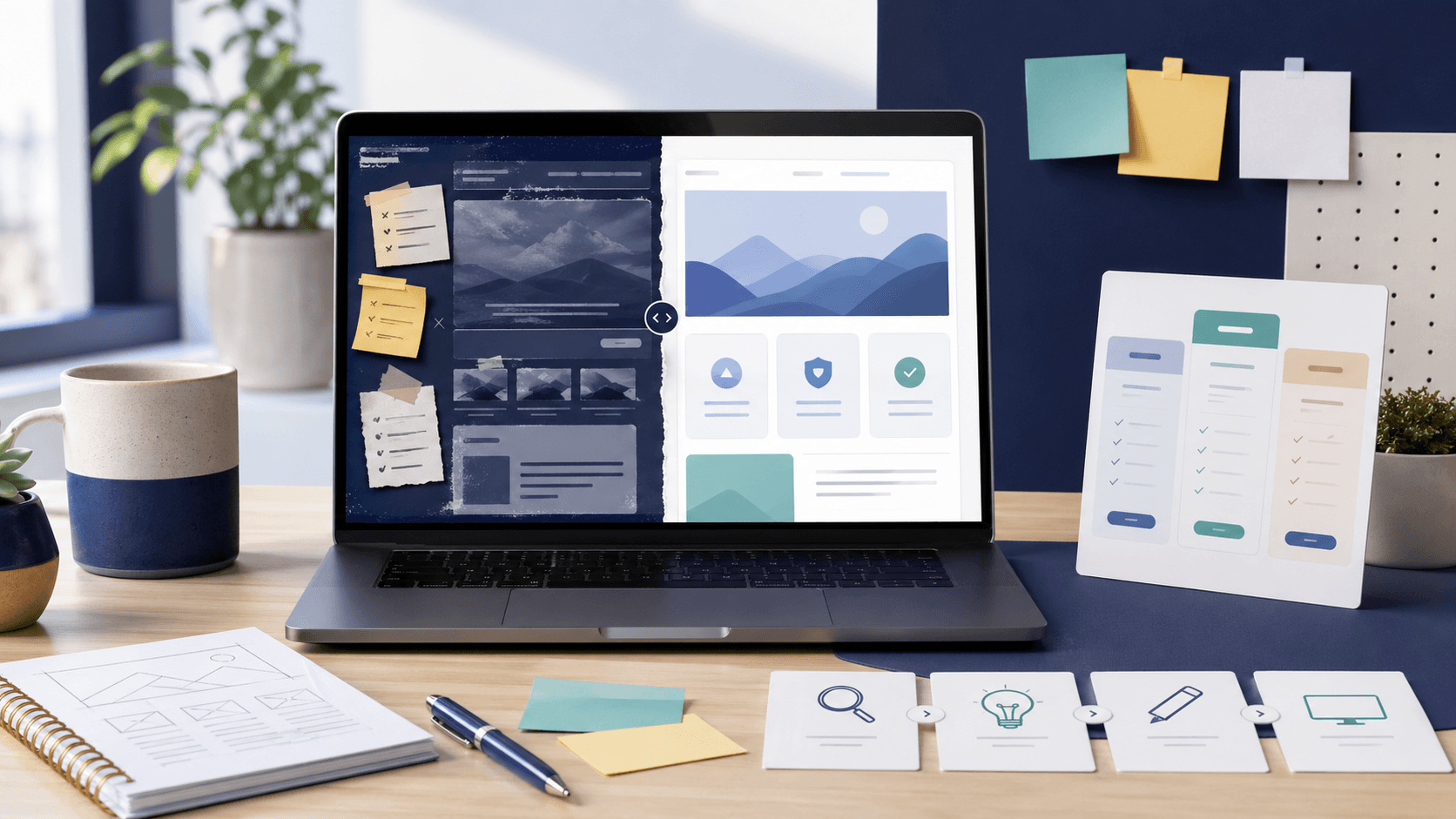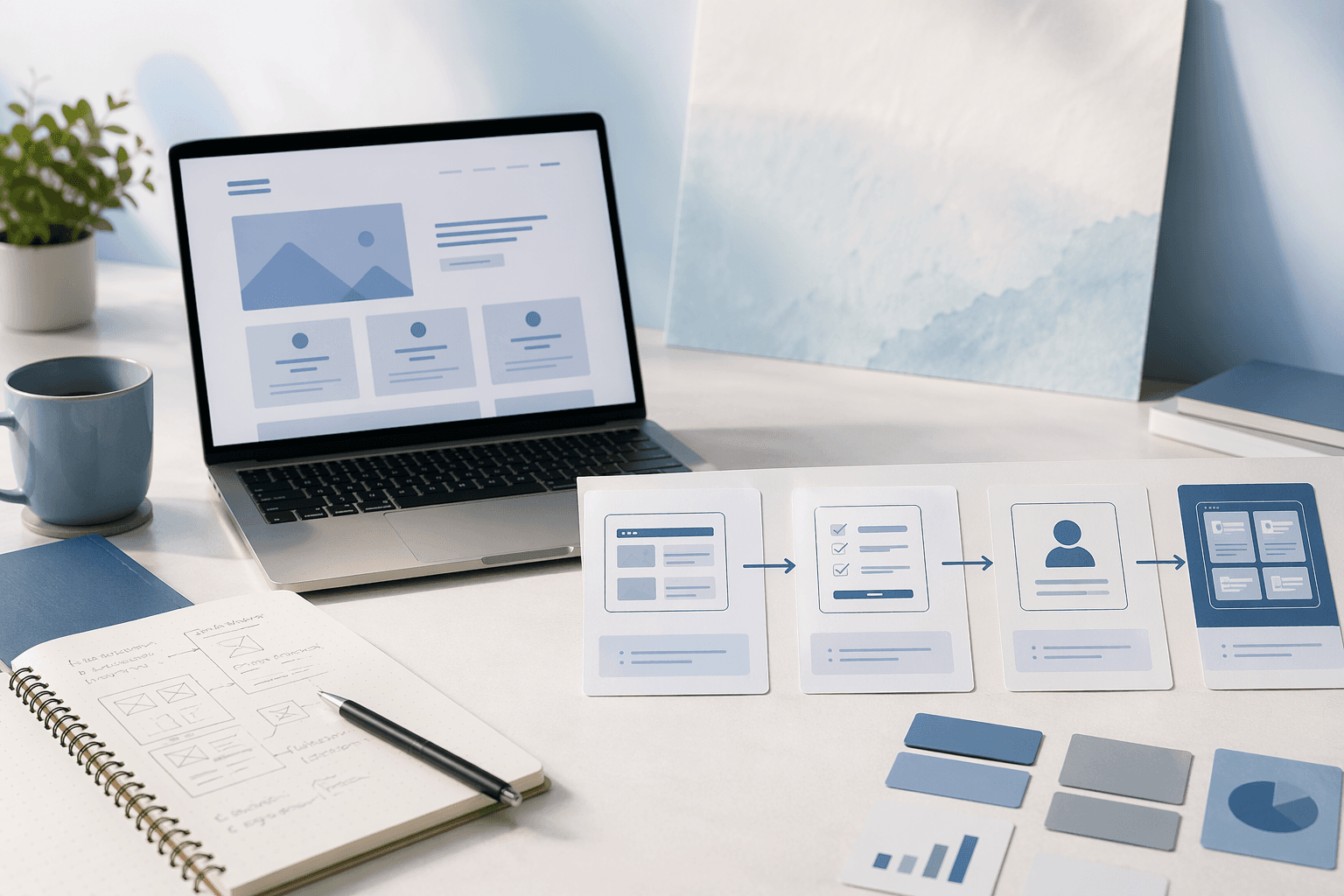
Most businesses do not need everything on day one
Owners often feel a strange kind of pressure when they start thinking about a new website.
They know the business needs a better online presence now, but they also worry about what comes next:
- Will we need a smarter quote flow?
- Will customers need accounts later?
- Will this turn into software?
- Are we about to pay twice if we start simple?
That concern is reasonable.
The mistake is assuming the answer has to be either a basic brochure site or a giant custom build. Most small businesses need something in between: a first website that solves current problems cleanly and leaves room for deeper workflow or customer software later.
Phase one should fix discovery, clarity, and the first handoff
The first version of the site should usually do four jobs well:
- help the business get found,
- explain the offer clearly,
- make the next step obvious,
- and hand off inquiries in a way the team can actually use.
That is the foundation.
If the site still cannot explain services, show proof, name the service area, and guide a visitor toward a quote, booking, or order, then deeper software is probably not the first bottleneck. For service businesses, that often means getting the core public pages right before anything more advanced. A focused page like Websites for Plumbers shows the level of clarity most local businesses need before layering on extra systems.
This is also why local SEO and structure matter early. The website should be crawlable, internally connected, and written around real customer questions rather than vague placeholder copy. If that part is still weak, it is worth tightening the search foundation before paying for more product-like features. What local SEO actually needs on a small business website breaks that down in more detail.
Build the website around information that can grow with you
Even when the first version is simple, the planning should not be careless.
The useful question is not, "How many features can we afford right now?" The useful question is, "What information keeps moving through this business, and how should the website collect or present it?"
For example:
- a contractor may need service categories, ZIP codes, photo uploads, and job details;
- a restaurant may need menu structure, pickup flow, and catering inquiry details;
- a consultant may need better qualification before the first call;
- a recurring-service business may eventually need status updates, approvals, or client logins.
Those are clues about future workflow.
You do not need to build the whole system immediately. But you do want the first site to be organized around real services, real handoffs, and real customer actions instead of generic filler pages and a catch-all contact form.
Leave room for smarter intake before you jump to a portal
Many businesses do not need customer accounts yet. They need a better handoff.
That can mean:
- a quote form that asks the right questions,
- separate paths for different request types,
- clearer confirmation messaging,
- or a cleaner route from the website into the team's actual process.
That is often the real bridge between a simple website and custom software.
If the business keeps collecting inquiries that need the same follow-up questions, the next step may be smarter intake rather than a full portal. That is the same operational shift covered in when a contact form is not enough for a small business website.
Portals, dashboards, and mobile apps start making more sense when repeat actions show up after the first inquiry:
- customers checking status,
- customers uploading files,
- customers requesting revisions,
- staff moving jobs through the same repeated stages,
- or buyers returning often enough that logging in is easier than starting over.
That is a later phase signal, not a day-one requirement for most businesses.
The roadmap should follow repeated behavior, not ambition
The healthiest roadmap is usually sequential:
- Launch the website that improves discovery and trust.
- Watch where the team keeps doing manual follow-up.
- Tighten intake, routing, and page structure where friction repeats.
- Add software, customer accounts, or app features only where the repeated behavior justifies them.
That sequence saves money for a simple reason: it lets the business learn from real usage before paying for speculative features.
A lot of waste comes from building phase three before phase one has done its job.
Where Blue Penguin fits
Blue Penguin is set up well for this kind of roadmap because the work does not have to stop at the public site. The same team can handle the first website, the SEO structure behind it, and the deeper software or mobile work if the business genuinely grows into that next phase.
That matters because many owners are not choosing between "website people" and "software people." They are trying to avoid rebuilding the same foundation twice.
The current Blue Penguin offer stays straightforward: $200 to launch, $30/year after that, and a three-month satisfaction guarantee, with pricing still negotiable when the scope truly moves beyond a standard website. That makes it easier to start with a strong first phase instead of waiting until the business can justify a larger custom build.
Start by mapping the next six months, not the next five years
If you are planning a new website, write down three things:
- What a new visitor needs to understand immediately.
- What information your team needs after someone reaches out.
- What repeated action keeps showing up that might become software later.
That short list will tell you far more than a giant feature brainstorm.
A good first website should not pretend to be future software. It should simply make future software easier to justify, scope, and connect when the time comes.
If you want help building that kind of first phase, start with Blue Penguin's get started flow. If you already know your business is outgrowing manual work, keep going with when a business needs custom software, not another spreadsheet.